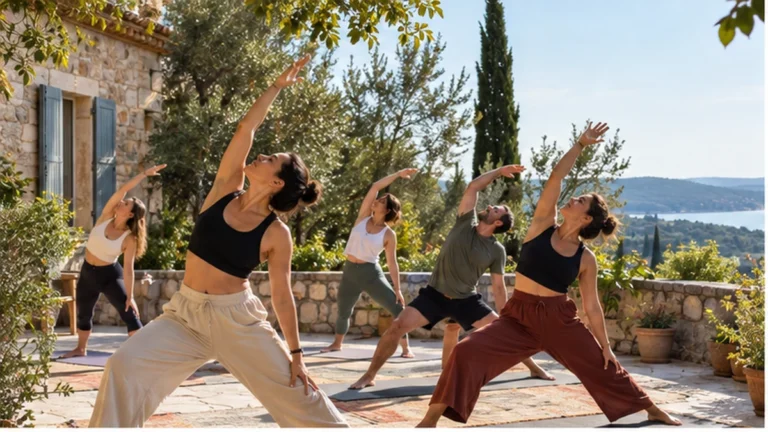

More effort is not always the answer. Sometimes five attentive minutes are more useful than twenty reluctant ones. Sometimes a capable person needs another set of eyes. Sometimes the next step is to stop pushing and wait until action becomes clearer. Today’s three selections explore a less dramatic but more sustainable kind of growth: shorter practice, better safeguards and effort guided by wisdom rather than force.
For How Long Do You Need to Meditate?
Eli Susman, Greater Good Magazine — October 7, 2026
Meditation can acquire the same intimidating aura as exercise. If twenty or thirty minutes is ideal, five minutes can start to feel pointless. Eli Susman reviews research that complicates that assumption, especially for beginners.
In one randomized study, adults with little or no meditation experience practised for either five or twenty minutes. Both groups improved, but the five-minute group showed greater gains in stress and mindful awareness. Other studies comparing ten, twenty and thirty minutes found that longer sessions often did not produce better results across the main outcomes. A meta-analysis covering 203 randomized trials and 15,971 participants found no association between session length and stronger outcomes.
The details matter. One study found a slightly greater increase in self-compassion from longer sessions, and experienced meditators may benefit differently from beginners. The larger message is not that long practice is useless. It is that consistency may matter more than duration, and a realistic practice is more valuable than an impressive plan you rarely follow. Observational data from more than 10,000 meditation-app users also linked practising four to seven days a week more strongly with mood, resilience and equanimity than session length.
Try this: Choose a five-minute practice you can repeat at the same point for seven days. Sit, feel the breath or the body, notice wandering and return without scolding yourself. At the end of the week, assess what actually changed before deciding whether to add more time.
Read the full article at Greater Good Magazine
The Hidden Danger of Burnout No One Warns You About
Joe White, Tiny Buddha — October 2026
Joe White’s account is not a clinical guide to burnout. It is a personal warning from someone who remained outwardly competent while his judgment was quietly deteriorating. After decades in technology and information security, White was accustomed to assessing risk. During severe burnout, he made financial decisions that contributed to a catastrophic loss of retirement savings.
The insight worth carrying forward is uncomfortable: functioning is not the same as functioning normally. White could still work, solve technical problems and hold complicated conversations. Because he was producing, he interpreted production as proof that he was fine. Meanwhile, poor sleep, brain fog and diminished concentration had become his baseline.
His professional background gives the essay a useful frame. Important systems are not protected by trusting one component completely. They use checks, delays and another set of eyes. White realized too late that he had made his own judgment a single point of failure. Competence can deepen that vulnerability because a long history of solving problems alone makes it harder to recognise the moment when you should not.
This is one person’s experience, not evidence that burnout explains every bad decision. Still, the safeguard he proposes is sensible: when you are depleted, avoid making an irreversible choice alone simply because you can still think and speak coherently.
Try this: Identify one consequential decision currently on your mind. Before acting, check sleep, concentration, irritability and your ability to enjoy ordinary things. If several have shifted, introduce a pause and ask a rested, trustworthy person to examine the decision independently.
Read the full article at Tiny Buddha
Why Doing Your Best Is Sometimes the Worst Thing You Can Do
Mavis Biss, Psyche
“Do your best” is usually offered as encouragement. Philosopher Mavis Biss asks what happens when maximum effort becomes a blunt instrument. Reflecting on a marriage that did not respond to more striving, she argues that some central problems cannot be repaired by clenching harder. They require patience, truthfulness, creativity, receptivity and, at times, non-action.
This is a philosophical argument, not a research finding. Biss draws from Kantian ethics and the ancient Chinese Yijing, or I Ching. The spiritual imagery is particularly striking: there are times to “cross the great water” and change course, but there are also times when inner preparation matters more than visible motion. Trying to force progress from inside a confused or painful state can deepen the difficulty.
Waiting, in this account, is not laziness. Acceptance may be more demanding than distraction, overwork or another attempt to control the outcome. The distinction Biss makes is between trying your hardest and trying more wisely. One is measured by exertion. The other stays responsive to what the situation is actually asking.
This is not permission to avoid necessary conversations or remain indefinitely in harmful circumstances. It is an invitation to examine whether effort is serving the good you care about, or merely helping you avoid the grief, uncertainty or limits you do not want to face.
Try this: Think of one area where you keep applying more force without movement. Ask, “What would trying differently look like?” Write three alternatives that are not simply doing more: seek counsel, tell an uncomfortable truth, reduce the goal, accept a limit or wait for better conditions.
Read the full article at Psyche
These pieces challenge a culture that often confuses intensity with sincerity. A shorter practice can be real practice. Asking for a second opinion can be an act of competence. Waiting can be part of moral and spiritual work. Growth does require effort, but it also requires enough awareness to know what kind of effort the moment needs.