
Aging is something we all experience, yet much of modern culture encourages us to resist it. We are constantly reminded of the importance of looking younger, staying productive and holding on to the abilities and identities we once had. But what if growing older offers something that our younger years cannot?
For nondual spiritual teacher and author Gina Lake, aging is not simply a process of physical change. It can also become an opportunity to loosen our identification with the ego, deepen our acceptance of life and discover a different kind of happiness.
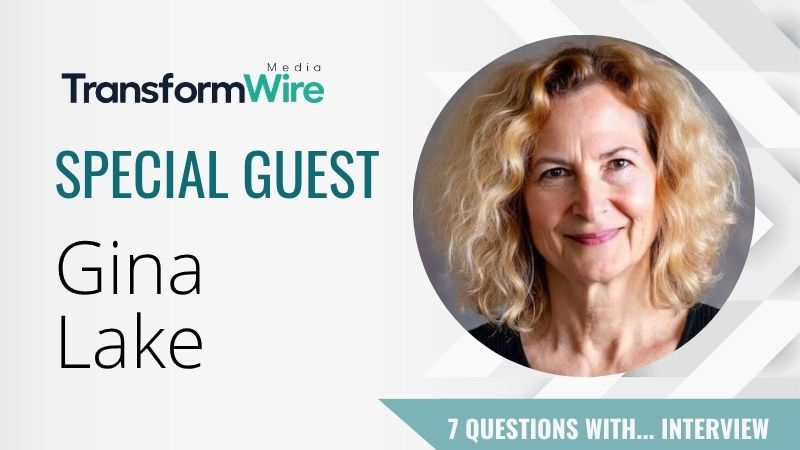
Gina is the author of 28 books exploring spirituality and awakening to our true nature. With a master’s degree in Counseling Psychology and more than three decades of experience supporting spiritual growth, her work explores the relationship between the egoic mind, our deeper nature and the possibility of finding peace in everyday life.
Her book, Every Flower Fades: Embracing Aging and Change, examines how we relate to aging, changing bodies, loss and mortality through a spiritual lens.
For this edition of 7 Questions With…, we invited Gina to explore why we struggle against aging, what genuine acceptance means when life becomes painful, and how growing older can help us recognize what truly matters.
The conversation also touches on the fear of death, the freedom that comes from releasing our attachment to appearance, and a deeply personal realization Gina has reached over the course of her own life.
1. Our culture puts enormous effort into resisting aging. From a spiritual perspective, what do you think we’re actually resisting when we struggle so much with getting older?
The ego is always resisting what is whether that is aging or having to do something we don’t want to do. That is what the ego does—that is its job description. The ego wants what it wants, regardless of what is. The ego desires a life other than the one we are given and even other than what is possible on planet earth. Its desires are often unrealistic and opposed to life, so going after them naturally leaves us feeling unfulfilled and unhappy. Even when we do get what we want, the ego wants more or something else. It is never satisfied.
Aging is often limiting—we can’t move the way we used to, we don’t look the way we used to, others don’t relate to us the way they used to, we can’t do everything we’d like to. Aging makes it especially difficult to get what the ego wants. Aging, instead, brings us what the ego doesn’t want.
The problem isn’t aging but that we relate to aging from our egos rather than from our true self, which is rational, unlike the ego, and loves life no matter what is happening. Within each of us is the capacity to say “yes” to whatever is happening. That is, in fact, the secret to happiness, not getting what the ego wants, which for the most part are fantasies that will never come true. We are here in this life for a reason—our soul chose this life and our experiences because it wants these experiences for its enrichment and evolution. Our soul is a glutton for experience—all kinds of experiences, including very difficult ones.
The soul or true self also has desires. It desires things that the ego does not desire, such as growth, understanding, learning, wisdom, peace, creativity, service, and love. Fortunately, these are always available to us in every circumstance. Life is for us, for our soul, not against us, as the ego feels. To be okay with aging, as with anything in life, we have to simply shift our attention away from the voice in our head, which is the ego’s voice and the cause of suffering, to our immediate experience of life in the here and now, where there is so much beauty, support, wisdom, and grace and where it is possible to be guided by our intuition. Once we are no longer involved with the voice in our head, we see through our true self’s eyes, and it is all good.
2. In Every Flower Fades, you explore our relationship with the changing body and what you call the “beauty game.” Is it possible to care about and enjoy our physical appearance while also becoming less identified with it?
When we are less ego-identified, our relationship to our physical appearance changes. We still tend to our body lovingly —nourish it, adorn it, celebrate it—while knowing that we are not the body. The true self will surely take care of the body and do so without resistance and complaints. It will inspire us to eat right, exercise, and do whatever is necessary to be healthy and—yes—to be our best self according to its values.
I would say that when we are less identified with the ego and our body (when we stop thinking of ourselves as our body or of our body as who we are), we don’t care about our appearance in the same way. Our appearance is seen for what it is—not essential to our happiness. We don’t think about our appearance in the same way, which is a great relief. The less identified with our appearance we are, the more enjoyment we will experience in everything, including our body and feeling appreciative and grateful for that, because that’s what happens when we move out of identification with the egoic mind and are present. Not being identified with the voice in our head and its commentary is a place of freedom, contentment, love, gratitude, and appreciation for whatever we are experiencing. If we look in the mirror in that state, we feel only gratitude and appreciation for having a body and the gift of another day under the sun. There are no judgments or comparisons or desires for anything to be other than the way it is—just gratitude for whatever is and gratitude that we have a body and for what it is able to do.
Because the true self accepts that life is the way it is and that our body is the way it is, there is nothing but love for the human self and the mysterious and messy unfolding of life. In this state of consciousness, we look out at life and at ourselves through different eyes—eyes that don’t judge, compare, complain, or desire for anything to be different than it is. Isn’t that what we all want?
The only thing standing in the way of feeling this way are the thoughts that run through our mind—the judgments, comparisons, and desires for things to be different. The voice in our head is the source of all suffering, so detaching from that is freeing and joyful. Just This is enough—finally! Alignment with the true self and disidentification with the ego naturally means being grateful for and appreciating everything, including things the ego doesn’t like or appreciate.
The problem with the ego is that it is never happy, no matter what we look like, at least not for long, and it pulls us into thoughts about our looks and makes looks much more important than they are or need to be. It’s extremely freeing to drop out of the obsession with our looks, since that is really what goes on in most people’s minds (certainly in women’s minds), and appreciate so many other things about life. The ego narrows our focus on what’s important to it and overlooks what is really important: love, peace, service, creativity, kindness, learning, and growth.
When we stop listening to the voice in our heads, we lose interest in what the voice in other people’s heads believes because we see that for what it is—more ego. So, we are generally not drawn to following the lead of those on social media or otherwise who are caught in believing that looks are more important than they are. We know better, so we tend not to focus on that but on other things that are more important to us—things we are moved to do intuitively: creativity, service, being in nature, playing or listening to music, learning, growing, healing, playing, and basking in the beauty of this amazing planet.
3. Spiritual teachings often speak about acceptance, but aging can involve very real losses, including health, physical ability, independence and people we love. What does genuine acceptance look like when we’re facing something that is genuinely painful?
Acceptance just means accepting what is. Acceptance doesn’t require that you (your ego) like what is, only that you accept that whatever is happening is happening. Usually, the ego gets stuck railing against reality and, in so doing, makes us miserable. This resistance to what is or refusal to accept reality is the cause of suffering—nothing else. As soon as we take the attitude that “this, too, must be the right experience,” we will be able to tap into our innate God-given resources of courage, patience, fortitude, perseverance, and the wisdom and insight that are always available to us from our divine self to help us through our challenges.
This “this too” attitude of acceptance must be applied to the voice in our head as well. We accept that we have an ego that doesn’t like what is, and we don’t indulge in the feelings it tries to provoke with its stories and nonacceptance. To accept, we often just need to stop not accepting the situation or experience. We don’t have to like what is happening or has happened, fortunately. That would be too big a leap. We only have to be with whatever is happening now, in this moment, and respond from a place of intuition, patience, wisdom, gentleness, and compassion for ourselves.
It is extremely powerful to reframe any resistance to our experiences as “This must be the right experience.” The ego says “no” to experiences it deems bad, but we are here to learn, grow, develop, and strengthen in love, courage, and wisdom, and in order for that to happen we must embrace our challenges for the opportunity for growth they provide.
Once we see life as a school and all of our experiences and the people we meet as our teachers, life becomes much easier. What makes life hard is the ego’s resistance to what is, which is ongoing and present in nearly every moment. The most difficult experiences of our lives are actually meant to teach us acceptance and surrender—surrender to reality, to the way things are. The ego lives in a world of desiring life to be other than the way it is, and that is, quite simply, the source of suffering, not the actual events of our lives.
If we are fully present to whatever we are experiencing, we will not suffer or suffer much less. It is the challenging events of our lives that teach us to let go of the ego’s ways because of the suffering the ego causes. Our most difficult challenges are our best and fastest teachers. We can grow by leaps and bounds spiritually as a result of these challenges—and we are meant to. Our challenges are grist for our spiritual mill. They are blessings in disguise.
One of the things our challenges teach us is to be present, which is key to our spiritual growth and happiness. When things are the toughest, we have to learn to take not only one day at a time, but one moment at a time. To do anything other than that in challenging times is to suffer. And how hard is it to just do what is called for in this moment? All we ever have to do and can do is deal with what is happening right now. No moment is so difficult that it can’t be handled; it’s what the egoic mind tells us about our situation that complicates things, creates unpleasant feelings, and leads us astray with poor advice. When the going gets tough, we need our intuition and insight more than ever, and for that, we need to be in the present moment and not be living in a state of fight or flight produced by the thoughts in our head.
Furthermore, while the ego sees things in terms of black and white, good and bad, the truth is that there is nothing in life you can experience that is all good or all bad. Every so-called bad thing (from the ego’s perspective) has advantages and gifts, and every so-called good thing has its disadvantages and challenges. This plane of existence is one of duality—everything is a mixed bag!
4. Your work often explores the difference between the egoic mind and our deeper nature. Does aging offer us a particular opportunity to loosen our identification with the ego and discover more of who we are beyond it?
What I’ve discovered over so many decades of being a human being is that Life has a way of humbling us and showing us that our ego’s desires are not what we thought they were when we were younger. It’s difficult for younger people to hear this teaching around desire because when we are younger, it really seems like life is all about getting our desires met and that we can make that happen by following the dictates of the voice in our head. We are programmed to believe that voice is who we are and that it knows how to make our life happen. As we get older, we start to realize that we are not so able to make life bend to our will and to our desires, that something else is steering life and that, in fact, it is very wise and very loving.
If we don’t become more spiritual and less ego-involved as we age, we will surely suffer greatly in old age. Life backs us into a corner, and if we are lucky, we learn to surrender to the spiritual truths set out in my books, such as the basic truth that life is a school and it is about learning (particularly learning to love) and not about getting what we want. If we don’t grow spiritually in our lifetime, meaning if we don’t learn the true cause of happiness but keep running after what the ego wants, we will undoubtedly find aging to be very difficult. Life will continue to present us with potentially transformative challenges until we grow in the ways we need to grow.
In our later years, we often have more time to explore things that we didn’t have time for when we had busier lives, such as spirituality and creativity or service. That is one of the blessings of getting older. Like everything in life, aging is not all bad! If you want the experience of aging to be other than the way it is, you’ll suffer, but if you can be grateful for what’s good about being older and focus on that, then being older can be the best time of one’s life. I know it is for me. I’m a wiser, gentler, better person in every way.
Aging brings a depth and a perspective that can’t be gained any other way than by “putting in your time.” It has its own beauty. Enjoying our later years is a matter of focusing on what we do have and on what we can do and not on what we don’t have or can’t do—and also not focusing on the past or fears of the future but just being very present. This life is a gift, and there is beauty in every moment if we have eyes to see. And one of the statements that runs throughout my books is that happiness is always available because no matter what our circumstances are, we can always love, and giving love is the greatest fulfillment and the reason for being.
5. Physical pain, illness and declining abilities can make it much harder to remain present and accepting. How can spiritual understanding help us meet these experiences without using spirituality to deny how difficult they actually are?
As I said, the challenges involved in aging, like the ones you mentioned, are potential catalysts for learning to be more present in life and for awakening out of the ego. Such challenges make it imperative that we grow spiritually and learn to be present. The suffering they cause can motivate us to meditate and perform other spiritual practices that will free us from this suffering.
The solution to suffering of all kinds is to learn to be present, to live in the here and now and not in our imaginations of the future or in our memories and stories about the past. How difficult is this moment, really? We make every experience more difficult than it needs to be by telling negative and fearful stories about it—by imagining the worst. Most things are manageable when we take one moment at a time and notice what is beautiful about it and what we have to be grateful for. Gratitude is the antidote to suffering, as is giving love to ourselves and others.
Compassion for ourselves is especially called for in our later years. As we age, we discover that we are not all powerful. In fact, we become less powerful in worldly ways and in the world’s eyes. As we look back on life, we realize that we could not control what we thought we could or make things turn out as we imagined. This is humbling, and one of the great gifts of aging. We are humbled in the face of Life, the Great Teacher. What is humbled, of course, is the ego. This is one of the ways the ego is overcome—by discovering the truth about it. It does not deliver what it promises. It has told us countless lies throughout our life. This deserves our compassion.
Compassion is just one of the qualities of our divine nature. All of the divine qualities are available in every moment and can be experienced if we turn our attention to them and, thereby, bring them to the foreground. That is our spiritual work, if not in our younger years, certainly in our later years, or we will to suffer as we age.
6. One of the deepest fears connected with aging is, of course, death. Can becoming more comfortable with our mortality actually help us live more fully while we’re here?
As we become older, the idea of our life being over becomes more of a reality, and for some with a terminal diagnosis, the remaining life might be quite short. So, older people lose their future, you could say, as most of their life is behind them and the future is uncertain. This can be a reason to invest more attention in the present moment. One of the challenges of aging is learning to drop thoughts about the future and one’s demise and also thoughts about the past, which often make people unhappy as they age, and just focus on the present moment. So, yes, becoming more comfortable with our mortality, with the idea that we have only so much time left, often causes people to focus on doing what really matters to them and what gives them joy as much as they can and to stop doing things they are no longer moved to do but may have felt obligated to do in the past. This often means spending more time with loved ones or doing something creative or of service. People can finally take time to do the things that matter to them. So, yes, this is one of the benefits of being nearer to the end of one’s life.
Becoming comfortable with reality, accepting the way life is, naturally results in being more comfortable with the fact that we die. Understanding the truth about life and the ego instead of arguing with reality, as the ego does, frees us to fall in love with life. Once we accept life as it is, we naturally also accept death, since it is part of the grand scheme of things: “Yes, this too.” Accepting and not fearing death frees us to love life and experience its preciousness, for everything passes away on this earth plane, and that makes everything in this life all the more precious. Once we realize that we are eternal spiritual beings and that we are connected to and guided by a loving Intelligence, death is understood to be a transition to a higher state of being, one less constricted. But, for now, this constriction serves a purpose in our soul’s growth.
7. Is there something about aging that you understand differently now, either personally or spiritually, than you did when you were younger?
One thing that is very clear to me now is that we are the same being throughout our life. The body changes, but the consciousness that animates the body does not. The same being we have always been is looking out of our eyes; only our body ages—we don’t age. When I was younger, I didn’t want to be here: I thought: “This is planet of the apes!! They have war here. How could this be?” I feel now that one of my greatest accomplishments is that I have fallen in love with life—the entire messiness of it. I am touched by both the beautiful and the ugly. The horror and the beauty together make life so poignant and precious. Both break our heart open. The passage of time reveals the preciousness of life, if we are fortunate enough to have eyes to see the truth about life.
For more information about Gina Lake, her books and spiritual teachings, visit RadicalHappiness.com.
You can also explore her book Every Flower Fades: Embracing Aging and Change here.