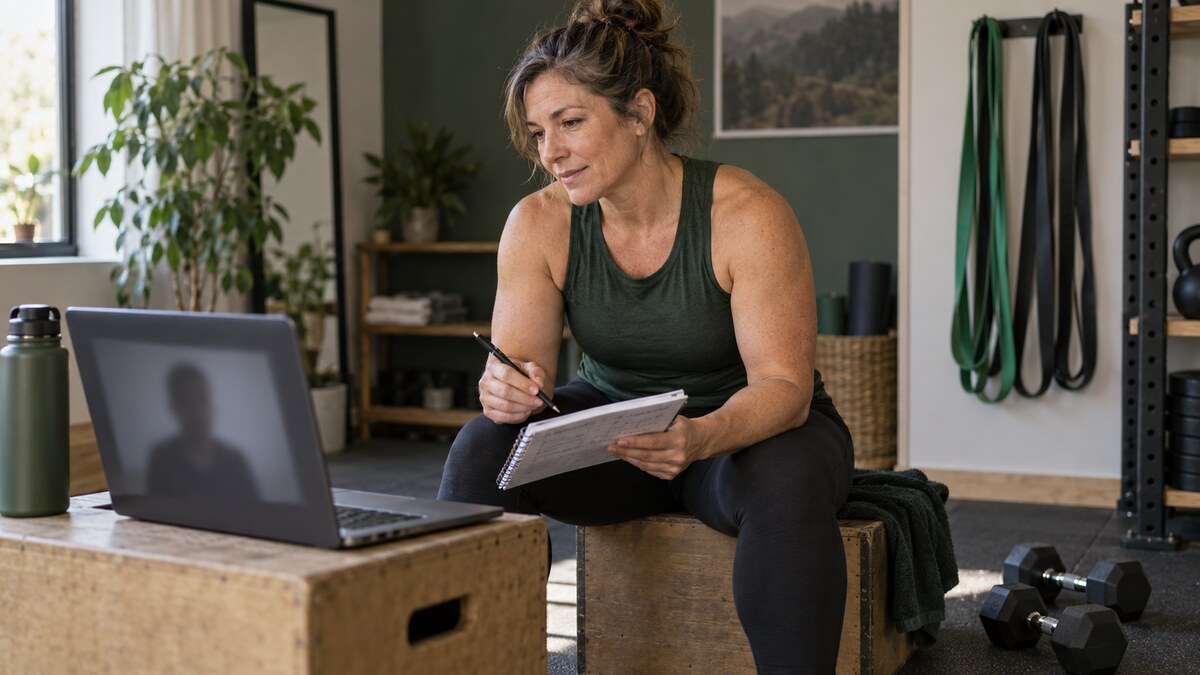
Erin Sturm has expanded her online coaching practice for women over 40 into two levels of one to one support, giving clients a choice between frequent hands on guidance and a more independent structure. Both options begin with an individual assessment and combine strength training, nutrition education, recovery planning and regular review.
The service is delivered online across the United States. Virtual check ins and customized plans allow clients to work from home, while Sturm adjusts the level of contact to the support model selected. The expansion is aimed at women navigating changes in strength, energy and body composition during midlife rather than a general fitness audience.
Assessment comes before programming
Sturm’s process starts by reviewing a client’s strength history, nutrition patterns, energy, recovery, stress and response to previous programs. The assessment is used to identify priorities before introducing a training or nutrition plan. That sequence is intended to avoid handing every client the same workout schedule or set of eating rules.
The next stage emphasizes foundational habits, including resistance training, recovery and nutrition that supports the person’s current needs. Education about perimenopause and menopause can be added as the work progresses. Where a client is considering medical care, Sturm’s role is limited to coaching and education, with prescribing and clinical decisions left to telehealth providers or other qualified professionals.
Two levels of individual support
The high touch option includes personalized programming, direct communication and regular check ins throughout the process. It is intended for clients who want close accountability and frequent adjustments as their circumstances change. Training, nutrition and recovery strategies are reviewed together rather than handled as unrelated tasks.
The lower touch option retains an individual strategy and professional oversight but places more responsibility on the client between periodic reviews. It is designed for women who are comfortable implementing a plan independently and want guidance without frequent contact. Both routes use the same assessment led foundation, which keeps the distinction focused on support and accountability rather than a different target outcome.
A practice shaped by midlife experience
Sturm is a former paramedic, a mother of six and a cancer survivor. Her experience of surgical menopause led her to focus more closely on strength, metabolism and the practical questions women face when familiar routines no longer feel appropriate. The current practice turns that focus into a defined coaching pathway rather than a short challenge.
For independent coaches, the development is also an example of service design around different client working styles. Some people need frequent contact, while others want a clear framework and room to act. By keeping the assessment and core method consistent, Sturm can vary the delivery without presenting the lighter support option as a generic program.
Source: Erin Sturm Strength and Metabolic Health
Web: https://www.sturmstrength.com/coaching-options