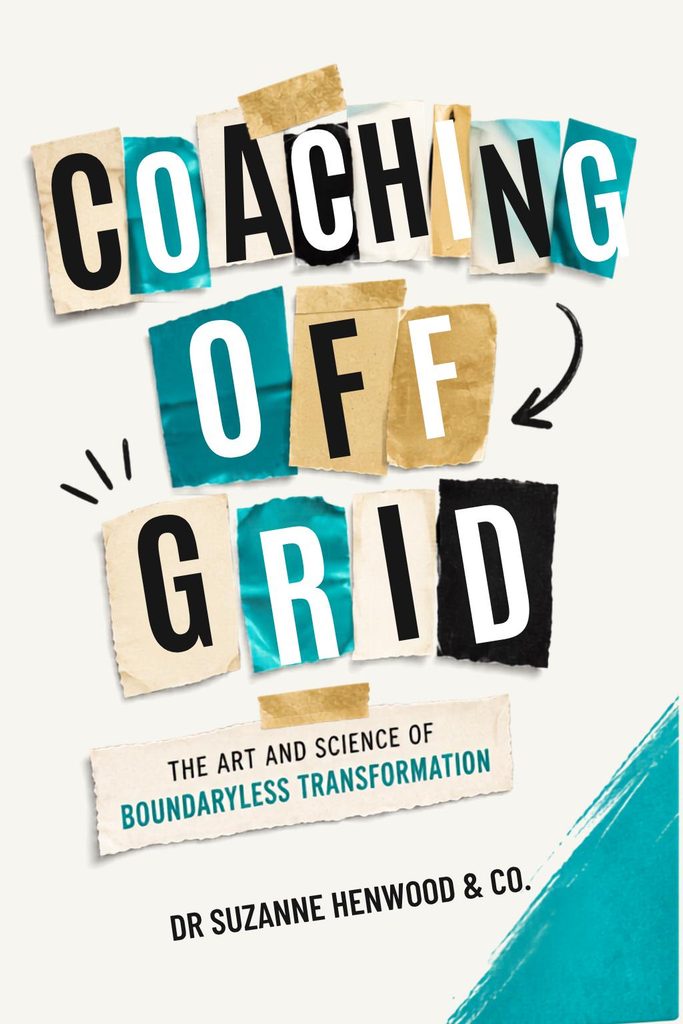
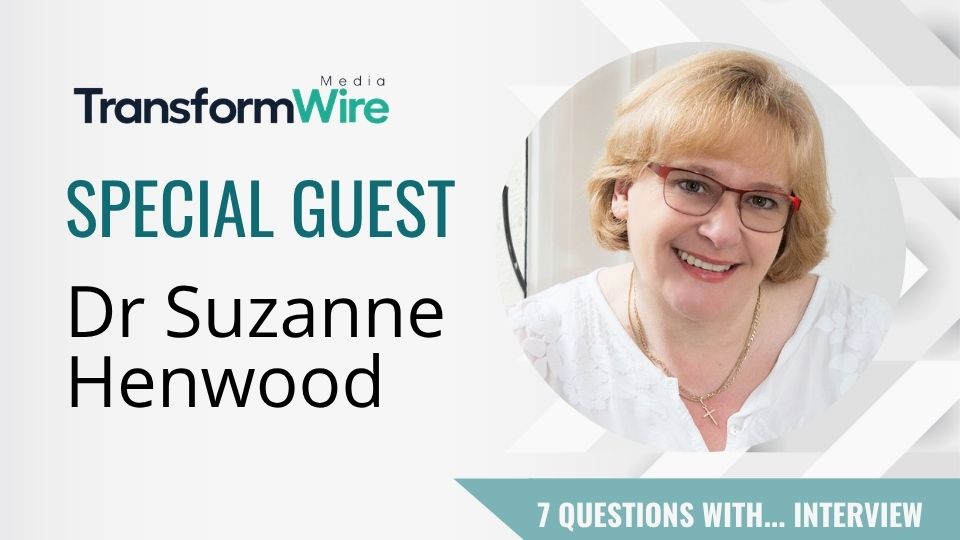
Dr Suzanne Henwood explores the future of coaching, the value of uncertainty, somatic awareness and the ideas behind her book Coaching Off Grid.
For decades, coaching has been associated with setting goals, finding solutions, and helping people move from where they are to where they want to be. But what happens when personal transformation requires something that doesn’t fit neatly into an established framework?
Dr Suzanne Henwood believes the coaching profession is already moving beyond many of its traditional boundaries. With 30 years of experience, she has witnessed significant changes in how coaches understand human development, and she believes there is still much more to explore.
Her latest book, Coaching Off Grid: The Art and Science of Boundaryless Transformation, brings together ten authors who share approaches that challenge conventional definitions of coaching. From somatic awareness and neuroscience to systemic thinking and the exploration of multiple forms of intelligence, the book opens a conversation about what coaching can become.
Through her bwise coaching approach, Dr Henwood also explores how coaches can work with the whole person while maintaining the professional responsibility and sense of safety that meaningful transformation requires.
In this edition of 7 Questions With, Dr Henwood discusses the courage to work without predetermined answers, the limitations of conventional coaching models, and why embracing uncertainty may be one of the most valuable skills a modern coach can develop.
1. Your new book, Coaching Off Grid:The Art and Science of Boundaryless Transformation and your previous book too Coaching Reimagined: Expanding Human Potential invites coaches to explore possibilities beyond established frameworks and familiar ways of working. What inspired this project, and what conversations do you hope it will open within the coaching profession?
My experience of coaching across 30 years is that it has changed enormously over that time.
And (I believe) has never been so valuable in the world.
When I trained, I trained in a variety of different coaching practices – and there was a huge focus on processes – doing things “right” and fundamentally about helping people create and achieve goals – move from A to B.
When I go for coaching these days – I want so much more than that.
I don’t want to feel I am being slotted into a process or a flow chart.
I don’t want to be able to predict what is going to be asked next.
I want someone to sit and be fully present with all of me and to be in the space with me that is safe and allows us both not to know. To explore. To allow wisdom to emerge.
I want the opportunity to explore deeply and broadly.
I want to go beyond what I know – or even what I think I might know.
I want to explore meaning and purpose.
I want to deeply understand myself – past present and future – and all parts that show up.
And I may not want to work towards a particular outcome – rather to a version of me that is about wholeness
And I certainly do not want to be fixed – or to look to someone else to give me the answers.
Having said that – I do want a coach who is brave enough to get deeply curious – to ask challenging questions – not from a place of knowing – but a place of genuine exploration with me. Someone who is brave enough to be vulnerable with me – not to know.
And – I was frustrated at some of the limiting boundaries placed around coaching – which did not reflect what I knew was happening in practice.
I knew some amazing coaches who were safely extending their skills to be able to step beyond what coaching once was.
I knew coaches were moving into embodiment, somatic practices, nervous system, quantum, energetic, spiritual, existential …. and so much more.
So, I thought wouldn’t it be wonderful to showcase some of this work – not to say this is how coaching SHOULD be done – but to share with courage the work that is being done – to open up a conversation about what if and what else….? To inspire others – to also be brave enough to step beyond what coaching has been – and explore what coaching can become to remain truly fit for purpose in todays world.
It made me ask – Where can we be honest about modern vibrant effective coaching practice – that may not fit in an existing box or definition?
Where can I be real about what I am doing in coaching – without being told its not coaching – by people who have not ventured over some artificial threshold?
So – I set about writing a book with colleagues and Coaching Off Grid gave 10 authors the opportunity to share their own practice to hopefully instigate deep and meaningful discussion about what is happening and what more is possible.
2. In Chapter 2, you explore the courage to step into not knowing. Coaches are often expected to provide clarity, direction, and confidence. What becomes possible when a coach is willing to admit that they don’t know where the journey will lead?
It is interesting that you say
Coaches are often expected to provide clarity, direction, and confidence
What if that is not true?
What presuppositions have to be true for us to hold that as what coaching is and what is expected of coaches?
What would become possible if we let go of that as a boundary? A restriction?
What if coaching was a partnership? Where the coach helped to create a safe space, and plays an important role – but is given the permission not to know? Not to be clear? Not to offer direction?
What if coaching was about truly trusting the client to play a key role in the directing? The uncovering? The exploring?
My own belief is when we can truly be vulnerable enough to say “I don’t know” – we open up an amazing space to be even more curious, to allow new wisdom and insight and awareness to emerge – and we enable clients to step beyond the restrictions of what they think they know. It is an incredibly powerful place to do coaching from.
3. Your work brings together neuroscience, embodied awareness, and systemic thinking. How has this broader understanding of human experience changed the way you approach transformation, and how does it connect with the philosophy behind Coaching Off Grid?
This is a great question.
As I have grown and developed my coaching approach over 30 years – my approach to coaching has changed, almost beyond recognition.
I now cannot imagine coaching without knowing about the nervous system and ensuring I calibrate constantly to ensure that safety and relationship is retained.
I cannot imagine not knowing at least a degree of neuroscience to help me to watch, feel and interpret what I see and sense – that may totally redirect the exploration I invite a client to come on with me.
I feel a freedom in Coaching Off Grid to go beyond what was possible before.
And yes – I have strong underpinning training and skills. And strong foundational principles that underpin my work to ensure myself and the client remain safe. Not necessarily comfortable – but safe.
Through having knowledge of how to work with the head brain and the nervous system in the body – I have an amazing additional set of tools to use to help myself and the client to work more deeply and more effectively and is giving permission to be real. To not know. To embrace and accept all of ourselves – as us. And where appropriate know how to make changes.
4. Many clients come to coaching hoping for clear goals and practical solutions. In your experience, how can a coach recognize when a client needs something different, perhaps more space for exploration rather than another strategy or action plan?
Before I answer this – I have to say we all have biases.
And my bias is that coaching has already changed and that clients are not actually looking just for clear goals. That will obviously change what I see, feel, hear and work on.
I assume now that the client may come wanting a number of different things – and may not even know what they want.
I assume – and openly outline – that I do not believe they are broken – so coaching is not about ‘fixing’ anything. We may not come up with a “solution” – maybe we come up with an insight – an acceptance – an embracing.
I focus on fully being with a new client. Listen deeply and feel deeply. And together determine what they want to explore – and expect to have to recontract that as we work together.
This means I ask different questions.
I hold different assumptions.
I explore different presuppositions in me through supervision.
And what I say coaching is – is very different as a result.
5. Through your bwise coaching approach, you’ve emphasized working with the whole person rather than focusing solely on thoughts or behavior. What have you discovered about the forms of wisdom that conventional coaching may overlook?
Wisdom is about multiple perspectives – so the literature says.
In coaching – in the early days – I felt like it was about understanding from the head brain. I felt it was about knowing and analysing. It was about planning a map forward.
If we are going to be real about wisdom – everything changes.
I have written my bwise Advanced Coaching certificate to work from 12 intelligences ( and that is still not exhaustive).
I work with internal intelligences – yes including the head -but not exhaustively in the head. I coach to the heart, the gut, the autonomic nervous system and the body – to name a few.
And I coach systemically to other variables that impact on a person’s experience and understanding – the environment, social connections and influence of others, their background etc
And, I coach to the space (that isn’t really space) between each of the 12 components. No variable stands alone. In a complex adaptive human system – which exists within a complex adaptive system, everything influences everything else. Coaching becomes a beautiful dance, a weaving of intelligences, a watching and feeling into the movement, the multiple perspectives.
bwise offers a very different approach which I believe is timely in a complex, fast changing and uncertain world.
6. You’ve written about the importance of psychological safety, co-regulation, and an evolving partnership between coach and client. How can coaches embrace uncertainty and work beyond familiar structures while still maintaining professional boundaries, ethical responsibility, and client safety?
Safety is a key foundation. Without safety, the likelihood of any meaningful change is minimal.
And safety is multi factorial – physical, emotional, mental, spiritual, environmental and so much more.
As coaches I believe it is essential we hold safety at our core and be very clear of when to not ask questions, or invite reflection. We need to be exquisitely aware of our own trainings, skillset and safety nets to ensure we know when we have reached the place where we would be wise to refer onwards.
It is through establishing that safety – for the coach – the client and the partnership – that we can begin to step into the uncertainty and not knowing.
Our head brains love to know – need to know – so when we step into that place of not knowing, it is likely to fire off a threat response in our nervous systems. Having a new tool box to stay flexible psychologically, not to shut this threat down, rather to work to be able to hold it safely and communicate with it and around it. That was not something I was taught in my initial coaching.
Being in strong supervisory relationships – with supervisors who can work at this level – helps to ensure coaches can critically reflect on their coaching and themselves to explore issues of ethics, training, change, safety, boundaries and more. Like coaching, that is a constantly changing and evolving system, which wise coaches frequently review and reassess.
7. After decades of working in coaching, education, and human development, what is one belief about personal transformation that you’ve changed your mind about, and what helped you see it differently?
This may sound radical – but my whole definition of coaching has changed.
I no longer believe coaching is about a linear, head based, talk focused and goals priority approach.
Coaching has evolved into the most exciting, timely, valuable offering which I see an essential component of living in todays world. I cannot imagine not being coached in this way to help me navigate life and living to the full.
Coaching Off Grid: The Art and Science of Boundaryless Transformation brings together ten contributors exploring new directions in coaching practice and professional development.
To learn more about Dr Suzanne Henwood’s work and her bwise coaching approach, visit her official website.