

Meditation teachers can now outsource a surprising amount of work to AI. They can use it to improve a guided meditation, organize a lesson, summarize research, generate reflection questions, rewrite a course description or find a clearer way to explain a difficult concept. There is nothing inherently wrong with that. But there is one thing a meditation teacher should be much more careful about outsourcing: the understanding they present to students as their own. AI can help you say something better. It should not quietly become the place where you learn what you are supposed to think about the practice you teach.
The difference is simple
Imagine you have spent years working with the idea of acceptance in your own meditation practice. You understand where people often misunderstand it, what resistance feels like and why acceptance does not necessarily mean passivity. You write a rough explanation and ask AI to make it clearer. Now imagine something different: a student asks you what acceptance really means, you are not sure, so you ask AI, receive an intelligent answer and then repeat that explanation to the student as though it reflects your own understanding.
The words may be excellent in both cases, but they did not come from the same place. In the first example, AI helped you communicate something you already understood. In the second, AI supplied the understanding itself. That is the boundary meditation teachers should pay attention to.
AI can make you sound wiser than you are
This is where generative AI creates a new problem for teaching. It is extremely good at producing sophisticated explanations of awareness, surrender, non-attachment, compassion, ego, presence and other ideas commonly discussed in meditation. A teacher can understand one of these ideas only vaguely, ask AI for an explanation and receive language that sounds thoughtful, mature and experienced. The explanation may even be correct.
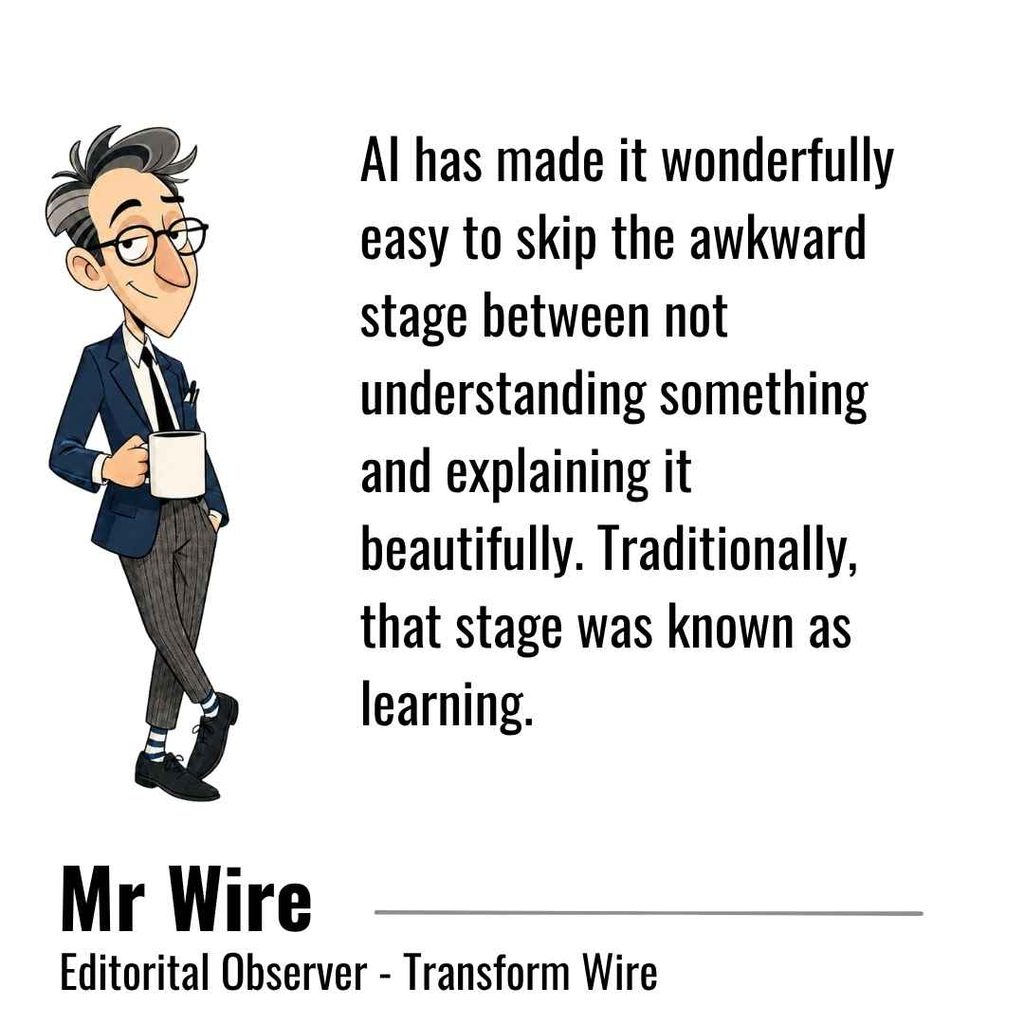
But the teacher can now sound as though they have reached an understanding they have not actually developed. That gap matters. Meditation has always had this problem. People can memorize teachings, borrow the language of their teachers or repeat ideas they have read in books. AI simply makes borrowed understanding much easier to acquire.
Some things need to be understood before they are taught
Meditation teaching is unusual because many of its central ideas cannot be fully understood from definitions alone. You can read a definition of non-judgment in a few seconds, but living with your own judgment during years of practice is something else. You can explain letting go intellectually, while actually noticing how tightly you hold on to control may take much longer.
You can ask AI what equanimity means and receive a perfectly good answer, but knowing the definition and recognizing equanimity in your own experience are not identical. A meditation teacher does not need to have mastered every quality they teach. Nobody does. But there should be some relationship between the teacher’s words and the teacher’s own practice. Otherwise, teaching can slowly become the presentation of ideas that sound lived but have mostly been generated elsewhere.
This also means being able to say “I don’t know”
A student may eventually ask something the teacher cannot answer. Perhaps they describe an unusual experience, ask about a subtle aspect of practice the teacher has never encountered, or the teacher simply does not know what the experience means. AI makes it very easy to remove that uncertainty by asking the question, receiving a plausible interpretation and continuing to teach as though the matter has been settled.
But not knowing is sometimes the more responsible position. The teacher may need to reflect, return to their own practice, consult a supervisor or speak with someone more experienced. That process is slower, but it is also part of how a teacher develops. An answer does not automatically become wisdom simply because it arrived quickly and sounded convincing.
Use AI for the language, not the authority
Meditation teachers do not need to avoid AI. Use it to improve your writing, organize your ideas, show you another way of explaining something or surface questions you have not considered. But when AI gives you an interpretation, pause before turning that interpretation into teaching and ask yourself: Do I actually understand this, or do I only understand the answer AI just gave me?
That may become one of the most important professional questions meditation teachers can ask in the AI age. AI can help you sound knowledgeable almost instantly, but the understanding behind those words should still take some work.