

A coach can be visible online and still have an AI visibility problem. The problem may not be that information is missing. It may be that the information exists under several different names that are never clearly connected.
Take a fictional example. Emma Reed is a career coach. She runs Clear Path Coaching and has created a six-month program called The Second Chapter Method.
Search for Emma and you find podcast interviews and professional profiles. Search for Clear Path Coaching and you find its website and business listings. Search for The Second Chapter Method and you find program pages and social posts. Everything appears to be there.
But would someone unfamiliar with Emma’s work immediately understand that she founded Clear Path Coaching and created The Second Chapter Method? That is a different question.
Three visible names do not necessarily make one visible brand
This situation is increasingly common among independent coaches and wellness professionals. A meditation teacher may work under their own name, operate a meditation school and teach a proprietary method. A wellness professional may have a personal website, a separate practice and a named certification program.
From the professional’s perspective, these relationships are obvious because they have been built over years. The public web may tell a different story.
A podcast biography may mention the person but not the business. A directory listing may identify the business without mentioning its signature method. An event page may promote the program while giving little information about who created it. None of those pages is necessarily wrong. Taken together, however, they can leave gaps.
This is what we might call a relationship visibility gap: the names themselves can be found, but the connections between them are poorly documented.
The answer is not necessarily to choose one brand
Traditional branding advice often asks whether a professional should build around a personal name or a business name. That can be useful, but it misses the problem here.
You may want your business to develop an identity separate from you. Your method may eventually be taught by other practitioners. Your certification may become better known than the company that originally launched it. There is nothing inherently wrong with that.
What matters is whether the connections remain understandable.
“Emma Reed founded Clear Path Coaching.” “Emma Reed created The Second Chapter Method.” “The Second Chapter Method is taught through Clear Path Coaching.”
Those sentences are almost boringly simple. That is precisely why they are useful. They establish relationships rather than merely repeating names.
Check what your website actually says
Many professionals assume these connections are obvious on their websites when they are only implied.
A program page might explain a methodology in great detail without ever clearly saying who developed it. An About page might tell the founder’s personal story without naming the programs they created. A business homepage may use “we” throughout the text without making the founder’s role particularly clear.
It is worth checking.
Look at your About page, program pages, professional biographies, media profiles and interviews. You are not searching for more mentions of your name. You are looking for the sentences that explain how the pieces belong together.
The goal is not to insert identical wording everywhere. It is to make the basic facts consistently understandable.
A better way to test AI visibility
There is also a simple experiment you can run.
Instead of asking an AI system only “Who is Emma Reed?”, ask “Who created The Second Chapter Method?”, “What is the relationship between Emma Reed and Clear Path Coaching?”, “What programs has Emma Reed developed?” and “What is Clear Path Coaching known for?”
These questions test something different.
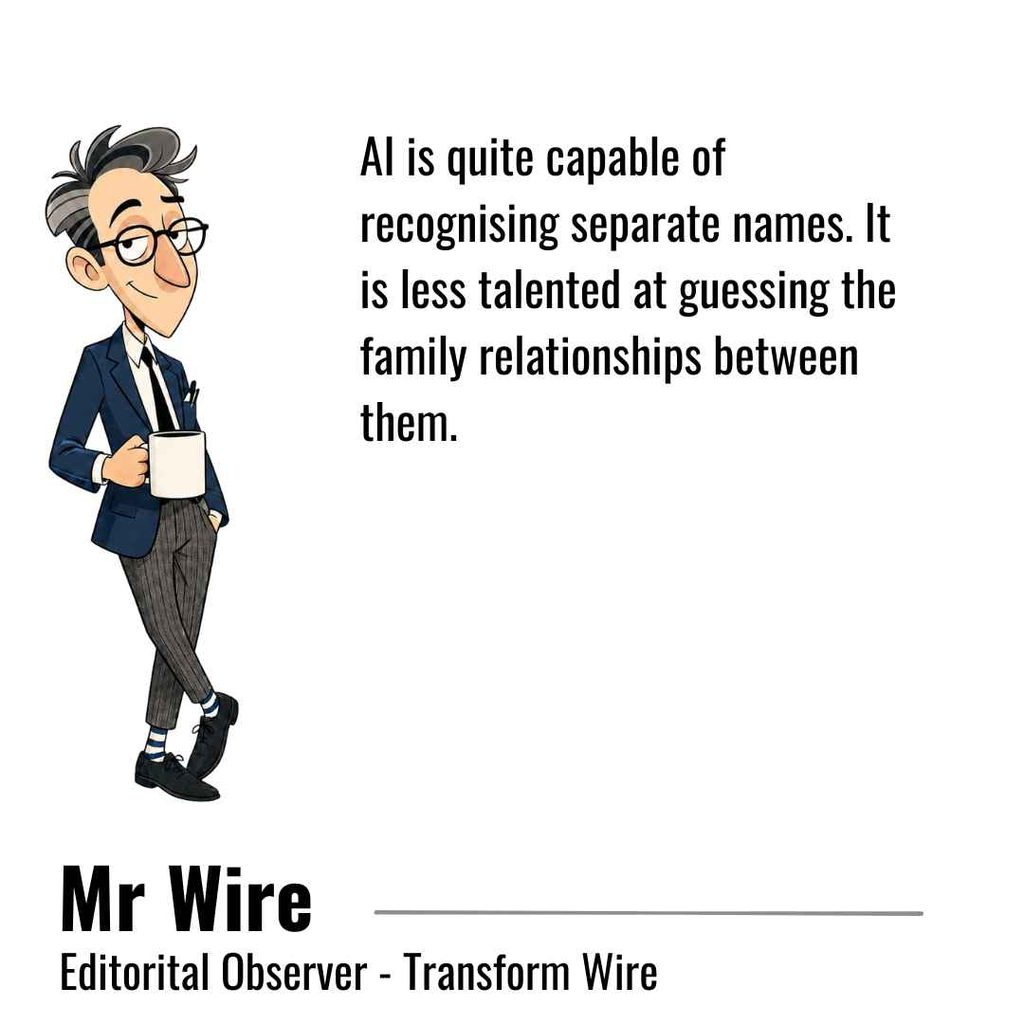
An AI system might know that the person, company and program all exist while being uncertain about how they relate to one another.
For professionals developing signature methods, schools, certifications and named programs, that distinction matters. Being visible is one thing. Making the structure of your work understandable is another.
Transform Wire Takeaway
Write down three names: your own professional name, your business name and your main program or methodology. Now try to find clear public statements connecting each of them.
If you have to explain the relationship yourself because your website and external profiles do not, there may be an important part of your online identity that is still only obvious to you.