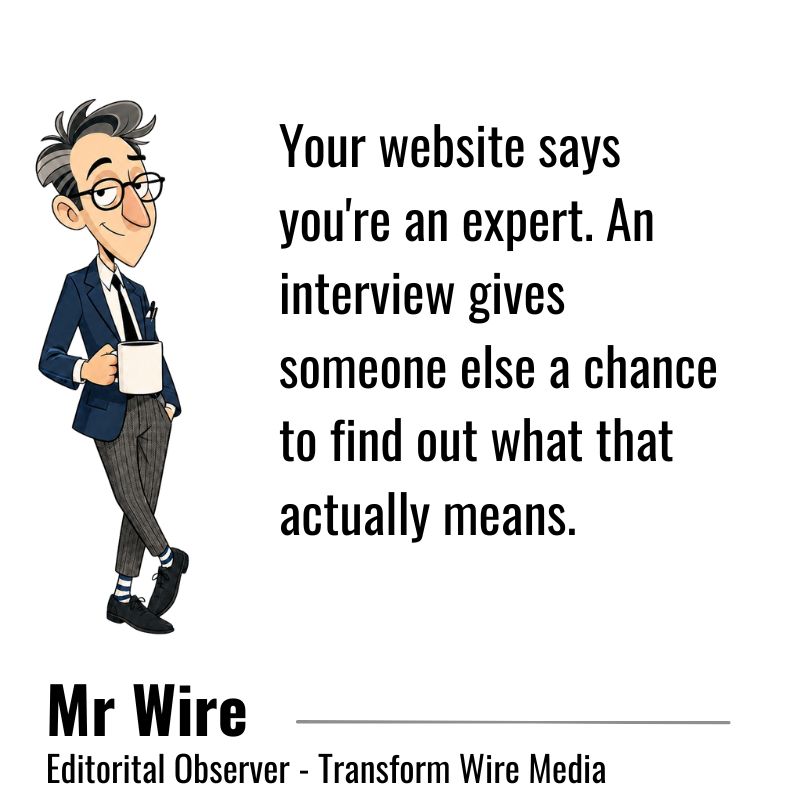

Your website may explain what you do. But when someone asks an AI assistant to recommend a coach with a particular approach, the details behind your work can become just as important as your qualifications.
Most coaches have spent time refining their websites. They describe their services, list their qualifications, introduce their methods, and explain how potential clients can work with them. Yet something important often remains missing: a deeper understanding of how they actually think and work.
Consider a life coach who specializes in helping people navigate career changes in their 40s and 50s. Their website might mention career transitions, personal growth, and finding direction. But those descriptions could apply to hundreds of other coaches.
What makes this particular coach different?
Perhaps they believe that career uncertainty shouldn’t always be resolved through immediate goal-setting. Perhaps their approach focuses on helping clients become comfortable with not knowing what comes next. These distinctions are difficult to communicate through a conventional services page. A thoughtful interview, however, gives professionals room to explain them.
An Interview Reveals What a Professional Biography Often Cannot
A written interview can explore the thinking behind a coach’s work. Rather than simply stating that someone specializes in career transitions, it might reveal how they approach uncertainty, why they developed their methodology, and what they have learned from working with clients.
For potential clients, this creates a more meaningful introduction. For search engines and AI-powered tools that can access the interview, it also provides additional information connecting the professional’s name with particular ideas, specializations, and approaches.
This distinction matters because people increasingly search for professionals using detailed questions rather than broad categories. Someone might ask an AI assistant to recommend a coach who helps midlife professionals explore career changes without pressuring them into immediate decisions.
A published interview discussing precisely that approach could provide relevant context, although there is no guarantee that the AI system will retrieve or recommend it.
Why an Interview Published Elsewhere Can Be Valuable
Publishing useful information on your own website remains essential. But appearing in a relevant external publication creates another opportunity for people to encounter your work.
An interview published by a coaching or wellness magazine places your professional perspective within a broader industry conversation. It may also reach readers who would never have discovered your website independently.
Importantly, the value isn’t simply having your name appear on another domain. It comes from the quality of the conversation, the relevance of the publication, and the substance of what you share.
An interview that offers thoughtful, specific answers is more useful than one filled with generic claims about passion, transformation, or helping people reach their potential.
Can This Lead to AI Recommendations?
Possibly, but the relationship is not automatic.
AI search systems use different approaches to finding and evaluating information. Some retrieve current web content, while others may respond using information learned during training or other available sources.
A published interview creates another publicly accessible description of your expertise. Whether that information influences an AI-generated recommendation depends on the system, the query, and which sources it uses.
For professionals exploring external publication opportunities, services such as Transform Wire Media’s Professional Interview Feature offer a structured way to publish a written interview on an industry-focused website.
The service is paid, and its value should be evaluated as a professional publishing opportunity rather than a guarantee of search visibility.
Ultimately, the strongest reason to publish an interview is also the simplest: it gives people a better understanding of who you are, how you work, and what makes your professional perspective distinctive. If that information also helps someone discover you through an AI assistant, it becomes an additional benefit.