
Imagine sitting down to meditate because you feel anxious, only to discover that ten minutes of quiet leaves you more uncomfortable than when you started. Does that mean you are doing something wrong?
Not necessarily. A study published in September 2026 offers a useful reminder that meditation does not feel the same for everyone. It also raises a surprisingly practical question: could a shorter session sometimes be the better place to start?
Researchers examined responses to brief online exercises involving mindfulness, self-compassion and gratitude. More than 5,000 adults from the United States and United Kingdom took part in the wider randomized study. Some were assigned a five-minute exercise, others a ten-minute exercise, while a comparison group used the internet as usual.
Across participants with available responses, 4.1 percent reported a distressing experience during the activity and 7.1 percent felt more negative afterward. But there is an important detail: people assigned to meditation were not more likely to report distress than people in the comparison group. They were also less likely to show a substantial increase in negative feelings.
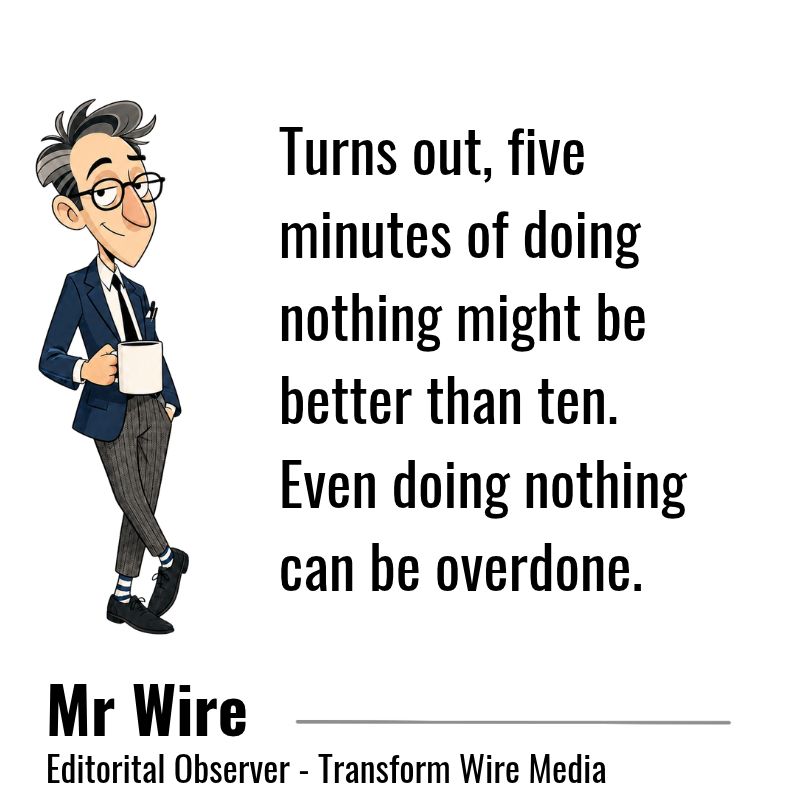
One finding nevertheless stood out. Participants assigned to ten-minute exercises were more likely to report a distressing experience than those assigned to five-minute exercises. That does not prove five minutes is the ideal length for everyone. It does suggest that the familiar advice to simply meditate longer deserves a little more thought.
Why quiet does not always feel peaceful
Meditation is often presented through images of calm faces, gentle music and effortless relaxation. Real experience can be less tidy. When outside distractions fade, people may become more aware of worries, uncomfortable sensations or emotions they had barely noticed during a busy day.
That does not automatically mean meditation is harmful. Nor does it mean every difficult feeling is a sign of progress. The distinction matters, especially when someone is new to the practice and assumes that feeling unsettled means they have failed.
The broader research is mixed. A 2025 review, published in a 2026 issue of Current Opinion in Psychology, describes reports of anxiety, depression and other unwanted experiences among some meditators. The authors also point out that researchers still struggle to distinguish temporary discomfort from lasting harm, and that findings vary considerably depending on how adverse experiences are measured.
The US National Center for Complementary and Integrative Health likewise says meditation is generally considered low risk, while acknowledging that studies of possible harms remain limited. Its guidance cautions against treating meditation as a replacement for conventional medical care.
What this means for someone who meditates
The practical message is not to fear meditation or to abandon a practice that feels helpful. It is to stop assuming that a longer session must always be a better one.
Someone trying meditation for the first time might find five minutes manageable and ten minutes overwhelming. Another person may comfortably sit for half an hour. A guided exercise, a walking practice and silent meditation can also feel very different, even though they are often discussed as if they were interchangeable.
For teachers and wellness professionals, the findings raise another question: are beginners being given enough permission to adjust a practice rather than push through every uncomfortable reaction? In clinical settings, researchers have called for clearer expectations, appropriate screening and support when difficulties arise.
There are limits to what this particular experiment can tell us. It examined short, digitally delivered exercises, not months of meditation training, intensive retreats or every spiritual practice. The comparison with ordinary internet use is useful, but it does not settle the wider question of meditation safety.
Still, the research challenges a small but persistent assumption in wellness culture: that more practice automatically means more benefit. Sometimes the more interesting question is not how long someone can sit quietly, but what kind of practice actually suits them.
Source: Web: JMIR Mental Health, September 2026 study
Source: Web: Current Opinion in Psychology review
Source: Web: National Center for Complementary and Integrative Health