
Yoga teacher and author Tony Tenaglier released In a Rush to Go Nowhere: Finding Savasana on October 20, 2026, with a question that reaches beyond flexibility and physical technique: what changes when the attention cultivated in yoga class follows a person into the rest of the day?
The New Hampshire author approaches that question through yoga philosophy, neuroscience and experiences drawn from teaching and practice. Rather than rejecting the physical side of modern yoga, the book considers whether a strong emphasis on poses, sequences and performance can leave less room for stillness, reflection and the ethical dimensions of the tradition.
Finding the practice beyond the posture
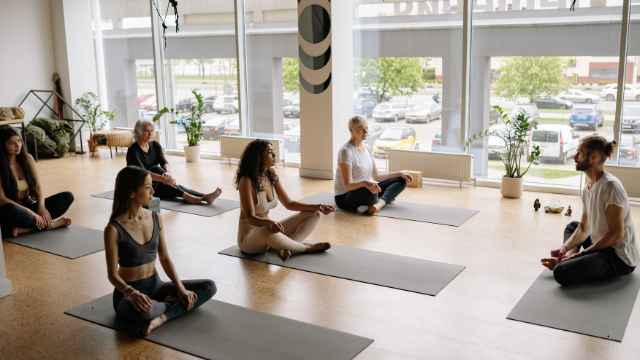
Savasana, commonly practiced as a period of rest near the end of a class, provides the book’s organizing image. Tenaglier is interested in the gap between being able to settle on a mat and being able to respond with similar steadiness when work, technology or ordinary frustrations demand attention. The issue is not whether a student can execute a position correctly, but whether practice changes how that student meets everyday experience.
The book draws on the eight limbs of yoga and the Yoga Sutras to place physical postures within a broader framework. It considers ethical principles, self-discipline, breath regulation, withdrawal of the senses, concentration and meditation alongside movement. Tenaglier also uses B.K.S. Iyengar’s image of yoga as a tree to emphasize that the visible physical practice is only one part of a larger tradition.
That broader view shapes his treatment of familiar features of contemporary classes. Music and technology are discussed not as things that must disappear, but as choices worth examining. The relevant question is whether they support attention or make it easier to avoid the quiet that a practice might otherwise invite.
Small experiments in everyday attention
Tenaglier uses personal stories and recurring characters to connect philosophical ideas with situations outside a studio. Chapters include sections called “Putting It Into Practice,” designed to turn reflection into something readers can test during a commute, a stressful workday or a moment of reaching automatically for a phone.
His background spans yoga teaching, manufacturing leadership and doctoral research in industrial-organizational psychology. He also hosts conversations about work and yoga, giving the book a perspective that links the inner demands of attention with the environments in which people spend much of their time.
For yoga teachers, the release raises a practical teaching question: how much of a class prepares students for life after they leave? For students, it suggests that the most revealing measure of practice may appear hours later, in an ordinary reaction rather than a carefully held pose.
A companion Put It Into Practice workbook is available through the book’s official website.
Source: In a Rush to Go Nowhere
Web: https://inarushtogonowhere.com/